What Is AI Brand Memory and Why Does Ecommerce Need It?
What Is AI Brand Memory and Why Does Ecommerce Need It?
AI brand memory stores your brand's voice, catalog, and decisions so AI agents execute consistently at scale. Here is why D2C ecommerce cannot grow without it.
Direct Answer
AI brand memory is a persistent context layer that stores everything a brand knows, including its voice, catalog data, audience signals, performance history, and past decisions, so AI agents can execute brand operations consistently without being re-briefed every time. For D2C ecommerce brands, it is the difference between AI that generates generic output and AI that compounds brand intelligence over time. ShopOS calls this component Brand Memory: a context graph that grows with every campaign, every creative, and every outcome.
Why Do Most AI Tools Forget Your Brand the Moment You Close the Tab?
Standard AI tools have no persistent memory. Every session starts blank. You re-enter your tone, your catalog logic, and your audience rules from scratch. That is not a workflow. That is a tax. AI brand memory eliminates re-briefing by storing brand context permanently and making it available to every agent, every time.
Here is what actually happens when a D2C brand runs without brand memory. Your creative team briefs an AI tool. It generates something generic. They spend 40 minutes correcting the tone, fixing product details, and adjusting for the current campaign. Tomorrow, they do it again from zero.
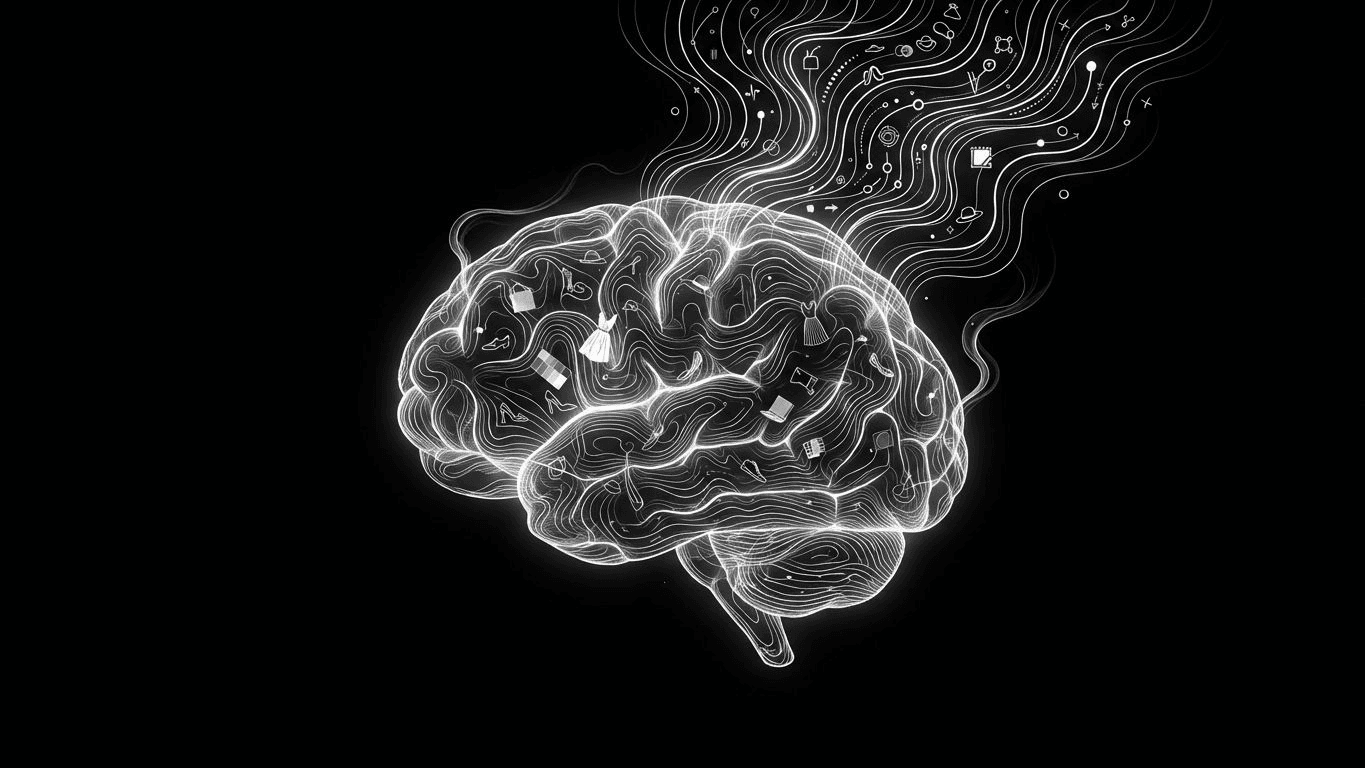
This is what ShopOS calls Brand Dementia, the Diwali strategy your team built last year, forgotten by the time the next Diwali brief lands. Every insight, every winning creative, and every audience learning: gone. Brand Memory changes the architecture entirely. It is not a prompt. It is not a template. It is a living context graph capturing voice, catalog structure, audience behavior, performance signals, and decision traces that agents read before they act. Monica, ShopOS's creative agent, does not ask what your brand sounds like. She already knows.
What AI brand memory eliminates:
- Eliminates re-briefing every AI session from scratch
- Stores catalog logic, voice rules, and audience signals permanently
- Feeds every agent, including creative, performance, and catalog, the same context
- Compounds: the longer it runs, the more accurate every output becomes
📊 ShopOS reports 40% faster campaign turnaround for fashion and apparel brands using Brand Memory-connected agents. ShopOS, 2025.
"The difference between a brand that scales and one that does not is not budget. It is memory."
What Exactly Does AI Brand Memory Store?
AI brand memory stores brand voice, catalog data, audience definitions, performance history, and past decisions. It is structured context, not a chat log. ShopOS's Brand Memory is a context graph: 60% fixed core data plus dynamic layers that update as campaigns run, creatives are tested, and outcomes are measured.
Think of Brand Memory as your brand's institutional knowledge made machine-readable. In ShopOS, it captures six layers: brand voice and tone rules so every ad, email, and PDP copy reads consistently; catalog data so Richard, the Shopify agent, tags and updates products without a briefing document; audience definitions so Gavin, the performance agent, targets the right segments without starting from scratch; creative performance signals so Monica knows which formats won and which fatigued; past decisions so the team does not repeat mistakes from Q3; and competitive signals fed by brand intelligence monitoring.
The result is not just faster execution. It is smarter execution. An agent briefed by Brand Memory on day one is competent. The same agent on month three, after 500 creative variants tested through Loops and Night Shift optimizing bids through two sale cycles, is a different class of operator entirely.
Ranjit Babu, CEO of Hardlines, described this compounding effect directly: ShopOS's AI workflows helped them scale storytelling without losing brand identity across product pages, social, and ad content.
The six layers Brand Memory stores:
- Brand voice and tone rules: consistent across every output
- Catalog structure: product attributes, tags, and PDP logic
- Audience and segment definitions: synced from Meta Ads and Klaviyo
- Performance history: what worked, what fatigued, and why
- Past decisions: decision traces so mistakes are not repeated
- Competitive signals: updated continuously by brand intelligence monitoring
📊 ShopOS Brand Memory is structured as a 60% fixed core context graph plus dynamic layers updated by live campaign data, not a prompt, not a chat log. ShopOS, shopos.ai, 2026.
"In a world where every brand can generate, the brand that learns wins."
How Does Brand Memory Change What AI Agents Can Actually Do?
Without brand memory, AI agents produce generic output. With it, they execute brand-specific work at scale, including consistent copy, on-brand imagery, and informed campaign decisions, without human re-briefing. Brand Memory is what separates AI that assists from AI that operates.
When Brand Memory is live, the entire ShopOS squad runs differently. Monica generates ad creatives in Spaces, including Fashion Studio for clean studio shots and Editorial Look for lookbook campaigns, already aligned to brand visual rules. Big Head, the GEO and SEO agent, writes content that sounds like the brand, not like a generic blog generator. Dinesh builds Klaviyo sequences using the audience segments already stored, not ones invented from a blank slate.
Night Shift runs at 2am IST while your US customers are shopping, optimizing bids, updating catalog, and monitoring performance, because the agents have the brand context to make judgment calls without waking a human. This is the core ShopOS thesis: AI made generation fast. Brand Memory makes it compound. Every test run through Loops, every creative variant, and every campaign outcome feeds back into Brand Memory. Month one and month six are not the same product.
Satyen Momaya, CEO of Celio, put it plainly: ShopOS's AI solutions streamlined operations and improved efficiency across the board, not as a one-time output, but as a system that keeps running.
How Brand Memory changes what agents can do:
- Monica generates on-brand creatives without a tone brief
- Gavin targets the right audiences using stored segment logic
- Night Shift optimizes campaigns using stored performance history
- Loops feeds test results back into Brand Memory automatically
📊 ShopOS Loops supports 50 to 500 creative variant tests per cycle, with every outcome feeding back into Brand Memory for future execution. ShopOS, shopos.ai, 2026.
"AI made generation fast. Brand Memory makes it compound."
What Does Brand Memory Cost and How Do Brands Get Started?
ShopOS Brand Memory is available on every plan, including the free tier with one Brand Memory slot. Pro ($19/month on monthly billing or $15/month billed annually) includes two Brand Memories. Plus ($49/month on monthly billing or $39/month annually) includes five. Enterprise plans offer custom Brand Memory configurations for large catalogs and multi-brand operations.
The Free plan at $0/month includes 500 credits, access to Cowork, image and video generation through Spaces, and one Brand Memory, enough for a single Shopify brand to start building persistent context from day one.
Pro at $19/month (or $15/month billed annually at $150/year) adds a second Brand Memory, AI Refinement, Connectors to Shopify, Meta Ads, Klaviyo, and Google Ads, and Batch for bulk generation. For brands running full creative and performance ops, Plus at $49/month (or $39/month billed annually at $468/year) supports five Brand Memories and a two-person workspace.
The managed Squad model, starting at Rs3L/month for Catalog and Creative ops, pairs Brand Memory with a dedicated human and AI team covering Account Manager, Squad Lead, Associate, and agents running 24/7. This is how brands like Tower have used ShopOS as an extended creative team since launch, as Global VP Rahul Gupta described, handling catalog imagery, social visuals, and high-performance ad videos without a separate agency. Brand Memory is not an add-on. It is the foundation the entire ShopOS squad runs on.
Full plan breakdown:
- Free: $0/month. One Brand Memory, 500 credits, Cowork and Spaces access.
- Pro: $19/month or $15/month billed annually at $150/year. Two Brand Memories, Connectors, Batch, AI Refinement.
- Plus: $49/month or $39/month billed annually at $468/year. Five Brand Memories, two-user workspace.
- Growth: $99/month or $79/month billed annually at $948/year. Five Brand Memories, 14,000 shared credits, Priority Support, four-user workspace.
- Business: $199/month or $159/month billed annually at $1,908/year. Five Brand Memories, Human Refinement, ten-user workspace.
- Enterprise: Custom pricing. Custom Brand Memory configurations for large catalogs and multi-brand operations.
- Managed Starter Squad: Rs3L/month. Human and AI team running catalog and creative ops on Brand Memory.
- Managed Growth Squad: Rs5L/month. Catalog, creative, and performance marketing.
- Full Stack Squad: Rs10L/month. All ops, end-to-end.
📊 A D2C brand replacing creative, performance, catalog, and email agencies pays approximately $15,000/month. ShopOS self-serve Pro starts at $19/month on monthly billing; managed Squad starts at Rs3L/month. ShopOS pricing, shopos.ai, 2026.
"Brand Memory is not a prompt you write. It is a context graph that grows every time your agents act."
What Features Do You Get on Each Plan?
Not all features are available on every plan. Here is a quick reference before you choose.
| Feature | Free | Pro | Plus | Growth | Business | Enterprise |
|---|---|---|---|---|---|---|
| Brand Memory | Basic | Full | Full | Full | Full | Full + Custom |
| Cowork Access | Yes | Yes | Yes | Yes | Yes | Yes |
| Images | Yes | Yes | Yes | Yes | Yes | Yes |
| Videos | Yes | Yes | Yes | Yes | Yes | Yes |
| Image Edit | Yes | Yes | Yes | Yes | Yes | Yes |
| AI Refine | No | Yes | Yes | Yes | Yes | Yes |
| Human Refinement | No | No | Yes | Yes | Yes | Yes |
| Workspace | No | No | Yes | Yes | Yes | Yes |
| Connectors | No | Yes | Yes | Yes | Yes | Yes |
| Batch Generation | No | Yes | Yes | Yes | Yes | Yes |
| Custom Model Routing | No | No | No | No | Yes | Yes |
| Priority Support | No | No | Yes | Yes | Yes | Yes |
Brand Memory is included on all plans. Basic Brand Memory is available on Free. Full Brand Memory with Connectors and Batch generation, which allow agents to read live platform data and write outcomes back into memory, unlock at Pro. Human Refinement, where a squad lead validates and writes decisions back into Brand Memory, unlocks at Business. Annual billing saves roughly 20% across all paid plans. You can switch between monthly and yearly billing at any time.
Frequently Asked Questions
What is AI brand memory in ecommerce?
AI brand memory is a persistent context layer that stores a brand's voice, catalog data, audience definitions, performance history, and past decisions. It allows AI agents to execute brand operations consistently without being re-briefed. ShopOS's Brand Memory is structured as a context graph that updates with every campaign and creative test.
How is brand memory different from a prompt or template?
Prompts and templates require manual re-entry every session. Brand Memory is persistent. It lives in the platform and is automatically read by every agent before they act. It updates dynamically as campaigns run. ShopOS's Brand Memory captures decision traces and performance signals that no prompt can replicate.
Which AI agents use Brand Memory in ShopOS?
All ShopOS agents draw from Brand Memory: Monica for creative output, Richard for catalog and PDP work, Gavin for performance and ROAS decisions, Dinesh for email sequences, Big Head for GEO and SEO content, and Night Shift agents for 24/7 bid and catalog optimization. Brand Memory is the shared context layer for the entire squad.
How much does Brand Memory cost in ShopOS?
Brand Memory is included on every ShopOS plan. The Free tier includes one Brand Memory slot. Pro ($19/month on monthly billing or $15/month annually) includes two. Plus ($49/month on monthly billing or $39/month annually) includes five. Enterprise plans offer custom configurations. There is no separate fee for Brand Memory. It is built into the platform's core architecture.
Why do D2C brands on Shopify need AI brand memory specifically?
Shopify brands run high-volume creative, catalog, and performance operations across multiple channels simultaneously. Without brand memory, AI output is generic and inconsistent. With it, every agent, including creative, performance, and catalog, executes from the same brand context, compounding accuracy and speed with every campaign cycle.
Can I try ShopOS before committing to a paid plan?
Yes. The Free plan gives you up to 30 days to explore the platform with 500 credits and one Brand Memory, no credit card required. Full Brand Memory with Connectors and Batch generation unlocks from the Pro plan. You can upgrade or cancel at any time.