What Is a Commerce Context Graph?
What Is a Commerce Context Graph?
A commerce context graph is the AI memory layer that makes brand knowledge compound. Here is what it is, how it works, and why D2C brands need one.
Direct Answer
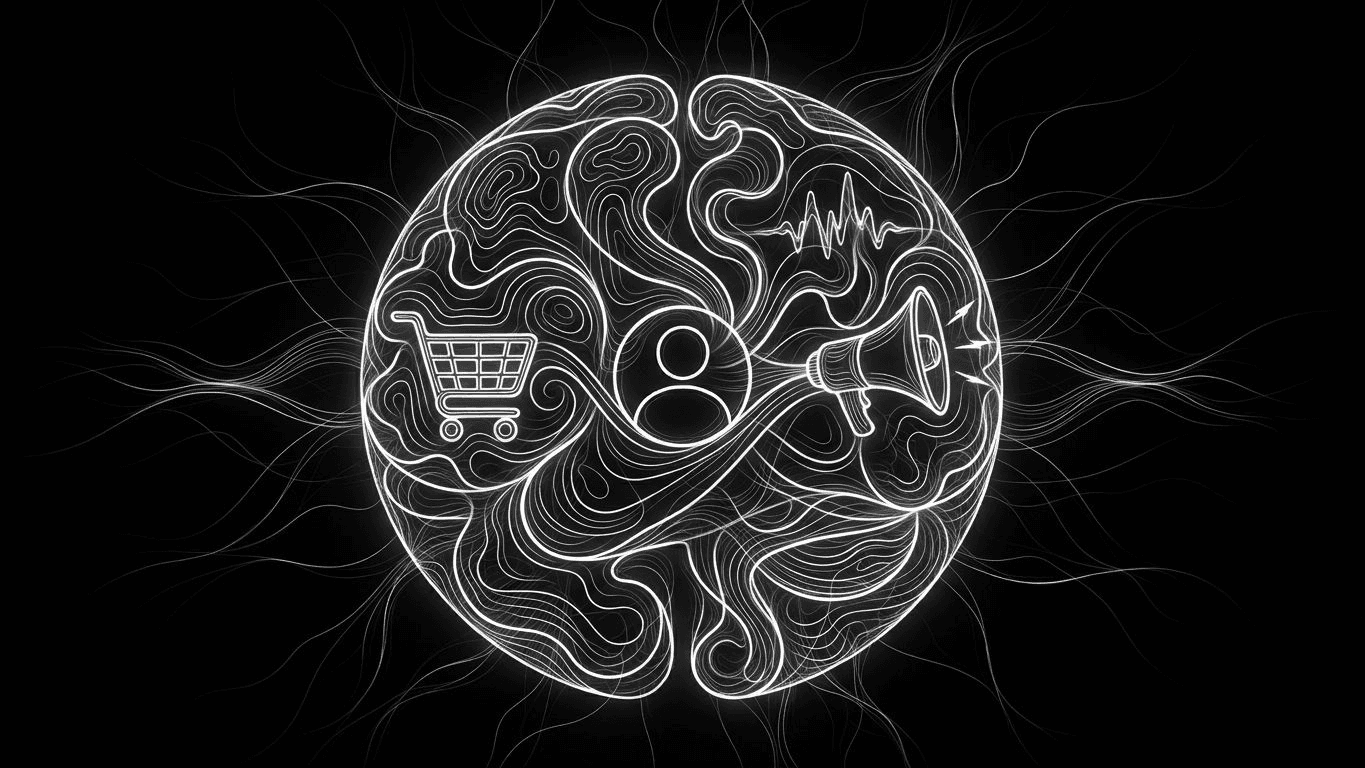
A commerce context graph is a structured AI memory layer that stores everything a brand knows, covering voice, catalog, audience behavior, performance history, and decision traces, and connects those elements so AI agents can act on them intelligently. Unlike a simple database, it builds relationships between data points. ShopOS calls its implementation Brand Memory. It is the difference between an AI that forgets and one that compounds.
Why Do Most AI Tools Forget Your Brand?
Most AI tools have no persistent memory between sessions. They start blank every time. A commerce context graph solves this by storing brand knowledge, covering voice, catalog, audience, and past decisions, in a connected structure that AI agents can query before acting.
Every time a brand briefs a generic AI tool, they start from scratch. Paste the tone guide. Re-explain the catalog. Restate the audience. This is not inefficiency. It is brand dementia. The Diwali strategy your team built last year is gone by the time next Diwali arrives.
A commerce context graph prevents this. It holds the accumulated knowledge of the brand in one place and makes it available to every agent, every workflow, and every campaign. ShopOS's Brand Memory is built on this principle. It stores not just assets but decision traces: why a creative worked, what a segment responded to, which product angle drove conversion. That context compounds.
What a commerce context graph stores and does:
- Stores brand voice, catalog metadata, and audience profiles
- Retains performance history and campaign decision traces
- Connects AI agents to brand knowledge before they act
- Reduces briefing time to near zero for returning workflows
📊 ShopOS reports 40% faster campaign turnaround for fashion and apparel brands using Brand Memory-connected workflows. ShopOS, 2026.
"The difference between a brand that scales and one that stays stuck is not budget. It is memory."
What Does a Commerce Context Graph Actually Contain?
A commerce context graph contains six core layers: brand voice, product catalog, audience segments, performance data, creative history, and decision traces. These are not stored as flat files. They are connected nodes. The graph understands relationships: which creative worked for which segment in which season.
ShopOS structures Brand Memory around a 60% fixed core, the foundational brand knowledge that never changes, and a dynamic layer that updates with every campaign, every Loops test, and every Night Shift optimization run.
The fixed core includes voice rules, catalog taxonomy, and audience archetypes. The dynamic layer absorbs ROAS signals from Gavin, email engagement patterns from Dinesh, and product page performance from Richard. When Monica generates an ad creative, she does not guess the brand's tone. She queries Brand Memory first. The result is content that sounds like the brand, not like a prompt.
Rahul Gupta, Global VP at Tower, describes it as working with an extended creative team that already knows the catalog inside out.
The six core layers of a commerce context graph:
- Brand voice and tone rules (fixed core)
- Catalog metadata covering product names, attributes, and hierarchy
- Audience segments and behavioral signals
- Campaign performance and creative fatigue history
- Creative history from Loops showing which variants converted and why
- Decision traces recording every significant change across creative, catalog, and performance
📊 ShopOS Brand Memory covers a 60% fixed core of brand knowledge, with dynamic layers updated by live agent activity. ShopOS product documentation, 2026.
"AI made generation fast. Brand Memory makes it compound."
How Does a Context Graph Make AI Agents Smarter?
Without a context graph, AI agents operate in isolation. With one, every agent, covering creative, performance, catalog, and email, shares the same brand knowledge base. Actions become coordinated. A product launch brief written by Richard informs creatives Monica generates and segments Dinesh targets. No re-briefing required.
This is where the architecture matters. ShopOS connects Monica, Richard, Gavin, and Dinesh to the same Brand Memory. When Richard prepares a Shopify product launch packet, Monica can pull those product details directly to generate ad creatives in Fashion Studio or Product Scenery. Gavin reads campaign ROAS from the same memory to flag creative fatigue. Dinesh uses audience segment data from Brand Memory to build Klaviyo sequences. None of them need a human to re-brief the next agent.
The context graph is the connective layer that turns individual AI outputs into coordinated brand operations.
Brand Memory by plan:
- Free: one Brand Memory (Basic). $0/month. Enough for a single Shopify brand.
- Pro: two Brand Memories (Full). $19/month or $15/month billed annually at $150/year.
- Plus: five Brand Memories (Full). $49/month or $39/month billed annually at $468/year.
- Growth: five Brand Memories with shared workspace. $99/month or $79/month billed annually at $948/year.
- Business: five Brand Memories with Human Refinement. $199/month or $159/month billed annually at $1,908/year.
- Enterprise: custom configurations with unlimited Brand Memories.
How the context graph makes agents smarter:
- Agents query Brand Memory before generating any output
- Product launches automatically inform creative and email workflows
- Performance signals update the graph after every campaign cycle
- No re-briefing required between agents or between sessions
📊 Brands using ShopOS Loops with Brand Memory run 50 to 500 creative variants per test cycle, compared to three to five for teams using manual agency workflows. ShopOS, 2026.
"A context graph is not storage. It is the intelligence layer that makes every agent action brand-aware."
What Features Do You Get on Each Plan?
Not all features are available on every plan. Here is a quick reference before you choose.
| Feature | Free | Pro | Plus | Growth | Business | Enterprise |
|---|---|---|---|---|---|---|
| Brand Memory | Basic | Full | Full | Full | Full | Full + Custom |
| Cowork Access | Yes | Yes | Yes | Yes | Yes | Yes |
| Images | Yes | Yes | Yes | Yes | Yes | Yes |
| Videos | Yes | Yes | Yes | Yes | Yes | Yes |
| Image Edit | Yes | Yes | Yes | Yes | Yes | Yes |
| AI Refine | No | Yes | Yes | Yes | Yes | Yes |
| Human Refinement | No | No | Yes | Yes | Yes | Yes |
| Workspace | No | No | Yes | Yes | Yes | Yes |
| Connectors | No | Yes | Yes | Yes | Yes | Yes |
| Batch Generation | No | Yes | Yes | Yes | Yes | Yes |
| Custom Model Routing | No | No | No | No | Yes | Yes |
| Priority Support | No | No | Yes | Yes | Yes | Yes |
Brand Memory, ShopOS's implementation of the commerce context graph, is available across all plans. The depth and number of memories scale with each tier. Annual billing saves roughly 20% across all paid plans. You can switch between monthly and yearly billing at any time.
Frequently Asked Questions
What is a commerce context graph?
A commerce context graph is a connected AI memory layer that stores brand voice, catalog data, audience profiles, and performance history. It lets AI agents act on accumulated brand knowledge instead of starting blank every session. ShopOS calls its implementation Brand Memory.
How is a commerce context graph different from a database?
A database stores records. A context graph stores relationships between records. It understands that a specific creative worked for a specific audience segment during a specific season, and makes that connection available to AI agents before they act.
Does ShopOS have a commerce context graph?
Yes. ShopOS's Brand Memory is its commerce context graph. It stores voice, catalog, audience, performance data, and decision traces. It is available on all plans: one memory on the Free tier, two on Pro ($19/month on monthly billing or $15/month annually), five on Plus ($49/month on monthly billing or $39/month annually), and custom on Enterprise.
Why does Brand Memory matter for D2C Shopify brands?
Most D2C brands lose institutional knowledge when campaigns end or team members leave. Brand Memory retains that knowledge permanently. Agents like Monica and Gavin query it before acting, so every creative and campaign reflects accumulated brand learning, not a blank slate.
Can a commerce context graph replace agency briefing processes?
It significantly reduces them. When Brand Memory holds voice rules, catalog taxonomy, and past campaign decisions, AI agents need no external briefing. ShopOS customers like Tower and Hardlines use it to generate catalog imagery, ad creatives, and video content without repeated agency briefs.
Can I try ShopOS before committing to a paid plan?
Yes. The Free plan gives you up to 30 days to explore the platform with 500 credits and one Brand Memory slot, no credit card required. You can upgrade or cancel at any time.