How Does ShopOS Make Sure Every AI Output Stays On-Brand?
How Does ShopOS Make Sure Every AI Output Stays On-Brand?
ShopOS keeps every AI output on-brand through Brand Memory, a context graph storing voice, catalog, audience, and performance data. Here is exactly how it works.
Direct Answer
ShopOS keeps every AI output on-brand through Brand Memory, a persistent context graph that stores a brand's voice, catalog, audience profiles, and past performance decisions. Every agent, including Monica for creative, Richard for catalog, and Gavin for performance, pulls from this shared memory before generating anything. The result is not just consistent output. It is output that gets smarter the longer you use it.
What Is Brand Memory and Why Does It Matter More Than Prompts?
Brand Memory is ShopOS's core context layer, a structured graph storing brand voice, catalog data, audience profiles, and decision traces. Unlike prompts, which reset every session, Brand Memory compounds over time. Every output, test result, and human decision trains it further.
Most AI tools ask you to re-explain your brand every single time. Paste your guidelines. Describe your tone. Upload your references. Then do it again next week. That is not memory. That is repetition.
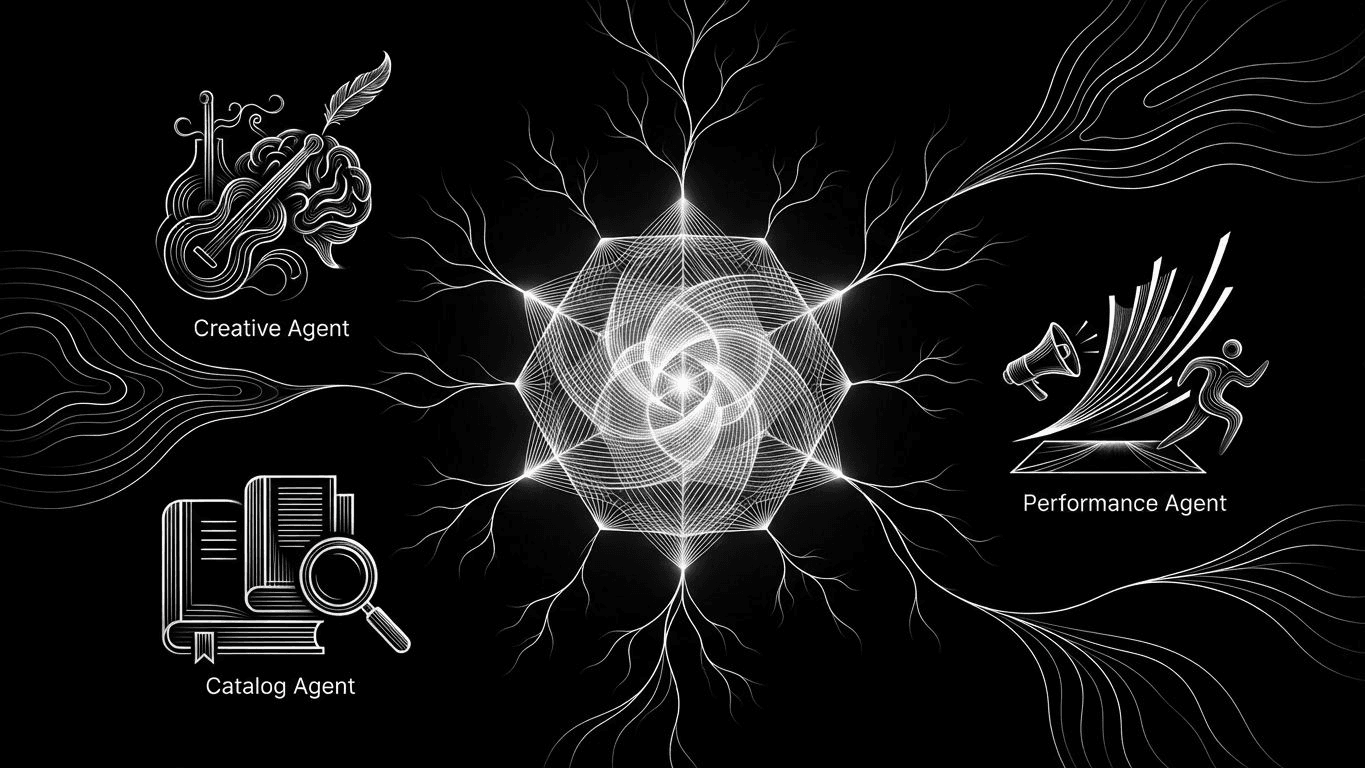
ShopOS works differently. Brand Memory is a persistent context graph, not a document, not a folder, and not a style guide PDF. It stores the brand's voice rules, catalog structure, audience segments, past creative decisions, and performance signals. When Monica generates an ad creative, she does not start from a blank prompt. She starts from everything the brand already knows. When Richard updates a product description, he references the same memory. When Gavin runs a ROAS audit, the performance context is already there.
The thesis behind this is direct: in a world where every brand can generate, the brand that learns wins.
What Brand Memory stores and enforces:
- Brand voice and tone stored as structured rules, not loose documents
- Catalog data, audience segments, and creative decisions captured automatically
- Every agent, including Monica, Richard, Gavin, and Dinesh, draws from the same memory
- Decision traces log what worked, what did not, and why, so mistakes do not repeat
📊 ShopOS Brand Memory includes a 60% fixed core of brand context that does not drift between sessions, ensuring baseline consistency across every agent output. ShopOS, 2026.
"Prompts reset. Brand Memory compounds. That is the difference between AI that generates content and AI that builds a brand."
How Do ShopOS Agents Actually Use Brand Memory to Stay On-Brand?
Every ShopOS agent, including Monica, Richard, Gavin, Dinesh, and Big Head, references Brand Memory before executing any task. Monica uses it to match creative direction. Richard uses it to write PDP copy. Gavin uses it to align ad strategy with past ROAS signals. No agent operates in isolation.
The agent structure inside ShopOS is designed so that no single output exists in isolation. Monica, the Creative Director agent, handles social content, ad creatives, email design, and brand assets. She uses Brand Memory to match the brand's established visual direction and copy tone, not just a generic aesthetic. When Tower launched in India, ShopOS functioned as an extended creative team handling catalog imagery, social visuals, and high-performance ad videos. The brand context was stored, not re-briefed.
Richard, the Shopify Store Manager agent, uses Brand Memory to write PDP copy and catalog tags that match how the brand speaks, not how the category generically speaks. Gavin, the Performance agent, runs ROAS audits against historical signals stored in memory, so campaign recommendations reflect what has actually worked for this specific brand. Dinesh uses CRM and Klaviyo data stored in memory to write email sequences that sound like the brand, not like a template.
This is the architecture that makes on-brand consistency a system, not a hope.
How each agent uses Brand Memory:
- Monica: ad creatives and social content generated against stored brand voice and visual rules
- Richard: PDP copy and catalog tagging aligned to how the brand speaks about its products
- Gavin: performance strategy anchored in historical ROAS signals from Brand Memory
- Dinesh: email sequences that sound like the brand, not a generic drip template
📊 A fashion and apparel brand using ShopOS saw 40% faster campaign turnaround after implementing Brand Memory-driven agent workflows. ShopOS case study, 2026.
"Every ShopOS agent reads the same brief, not because a human sent it, but because Brand Memory makes it permanent."
What Happens When AI Output Needs a Human Check?
ShopOS's Refine feature combines AI Refinement (available from $19/month on monthly billing) with Human Refinement on Business plans ($199/month on monthly billing or $159/month annually). Human experts review outputs for brand taste and judgment before anything goes live. AI executes at scale. Humans guide the soul.
ShopOS's brand manifesto is not subtle about this: AI executes at scale. Humans guide the taste, the calls, and the soul. Refine is where that principle becomes a product feature.
On Pro plans at $19/month (or $15/month billed annually), AI Refinement automatically adjusts outputs against Brand Memory before delivery. On Business plans at $199/month (or $159/month billed annually at $1,908/year), Human Refinement adds a layer of expert review, where an actual person checks that the output clears the brand bar, not just the prompt. This matters especially for high-stakes creative: a campaign visual, a product launch PDP, or a seasonal lookbook generated through Editorial Look or Fashion Studio Spaces.
Anirudh Soory, VP at Hardlines, described the outcome plainly: AI-powered workflows helped them scale storytelling without compromising on brand identity. That is what Human Refinement protects, the identity part. Loops then closes the feedback cycle, running 50 to 500 variant tests and feeding results back into Brand Memory so the next output starts ahead of where this one did.
The Refine workflow:
- AI Refinement: automated brand-alignment checks on every output, available from Pro
- Human Refinement: expert review layer for high-stakes creative, available from Business
- Loops: 50 to 500 variant testing feeds results back into Brand Memory automatically
- Spaces like Fashion Studio and Editorial Look ensure visual outputs match brand aesthetic
Refine access by plan:
- Free: $0/month. 500 credits, one Brand Memory. No Refinement layer.
- Pro: $19/month or $15/month billed annually at $150/year. AI Refinement included.
- Plus: $49/month or $39/month billed annually at $468/year. AI Refinement, five Brand Memories, two-user workspace.
- Growth: $99/month or $79/month billed annually at $948/year. AI Refinement, 14,000 credits, Priority Support.
- Business: $199/month or $159/month billed annually at $1,908/year. Human Refinement included. Expert review before anything goes live.
- Enterprise: Custom pricing. Custom model routing, unlimited Brand Memories, dedicated support.
📊 ShopOS Business plans include Human Refinement, combining AI scale with human judgment to maintain brand integrity across all outputs. ShopOS pricing, 2026.
"AI Refinement checks the brief. Human Refinement checks the brand. The combination is what stops slop from going live."
Does Brand Memory Degrade Over Time or Get Smarter?
Brand Memory is designed to compound, not decay. Every decision, test result, and human edit feeds back into the context graph. The longer a brand uses ShopOS, the harder it becomes to replace, because the memory is the brand's accumulated intelligence.
One of the sharpest risks with AI-generated content is what ShopOS calls Brand Dementia, the Diwali strategy forgotten by next Diwali. A campaign runs, performs, and ends. Nobody captures why it worked. Next season, the team starts over. Agencies change account managers. Briefs get lost. The brand relearns the same lessons at the same cost.
Brand Memory is built specifically to prevent this. Decision traces log every creative choice, every performance signal, and every human refinement call. Month one, the agents know your basics. Month three, they know your catalog nuances, your audience's seasonal triggers, and your best-performing creative formats. That accumulated intelligence is the switching cost, and it works in the brand's favor.
Satyen Momaya, CEO of Celio, noted that ShopOS's AI solutions helped streamline operations and improve efficiency across the board. Efficiency is a byproduct. The compounding memory is the asset.
How Brand Memory compounds over time:
- Decision traces capture every creative call, test result, and human edit permanently
- Night Shift agents run 24/7, adding performance signals to Brand Memory while the team sleeps
- Brand Memory available across tiers: one on Free, two on Pro, five on Plus, custom on Enterprise
- Switching cost grows over time because the memory belongs to the brand, not the agency
📊 ShopOS Plus plans include five Brand Memories, enabling multi-brand or multi-line teams to maintain separate, compounding context graphs for each. ShopOS pricing, 2026.
"The brand that learns fastest wins. Brand Memory is how ShopOS makes learning automatic."
What Features Do You Get on Each Plan?
Not all features are available on every plan. Here is a quick reference before you choose.
| Feature | Free | Pro | Plus | Growth | Business | Enterprise |
|---|---|---|---|---|---|---|
| Brand Memory | Basic | Full | Full | Full | Full | Full + Custom |
| Cowork Access | Yes | Yes | Yes | Yes | Yes | Yes |
| Images | Yes | Yes | Yes | Yes | Yes | Yes |
| Videos | Yes | Yes | Yes | Yes | Yes | Yes |
| Image Edit | Yes | Yes | Yes | Yes | Yes | Yes |
| AI Refine | No | Yes | Yes | Yes | Yes | Yes |
| Human Refinement | No | No | Yes | Yes | Yes | Yes |
| Workspace | No | No | Yes | Yes | Yes | Yes |
| Connectors | No | Yes | Yes | Yes | Yes | Yes |
| Batch Generation | No | Yes | Yes | Yes | Yes | Yes |
| Custom Model Routing | No | No | No | No | Yes | Yes |
| Priority Support | No | No | Yes | Yes | Yes | Yes |
Brand Memory is available on all plans, with one slot on Free, two on Pro, and five from Plus onwards. AI Refinement, which checks outputs against Brand Memory before delivery, unlocks at Pro. Human Refinement, where an expert reviews outputs before publishing, unlocks at Business. Annual billing saves roughly 20% across all paid plans. You can switch between monthly and yearly billing at any time.
Frequently Asked Questions
What is Brand Memory in ShopOS?
Brand Memory is a persistent context graph inside ShopOS that stores a brand's voice, catalog data, audience profiles, creative decisions, and performance signals. Every agent, including Monica, Richard, Gavin, and Dinesh, references it before generating any output, ensuring consistency without re-briefing.
How many Brand Memories does ShopOS include per plan?
ShopOS Free includes one Brand Memory. Pro ($19/month on monthly billing or $15/month annually) includes two. Plus ($49/month on monthly billing or $39/month annually) includes five. Enterprise plans offer custom configurations for agencies or multi-brand teams managing separate context graphs.
What is the difference between AI Refinement and Human Refinement in ShopOS?
AI Refinement automatically checks outputs against Brand Memory before delivery, available from the Pro plan ($19/month on monthly billing or $15/month annually). Human Refinement adds an expert review layer where a real person validates brand taste and quality. It is included in Business plans ($199/month on monthly billing or $159/month annually).
Does ShopOS work for brands already using an agency?
Yes. ShopOS agents can complement an existing agency by handling execution, including catalog updates, ad creative variants, and email sequences, while the agency focuses on strategy. Brand Memory ensures every output the agents produce matches what the agency and brand have agreed on.
How does ShopOS prevent AI-generated content from becoming generic or off-brand over time?
Through Loops, ShopOS runs 50 to 500 creative variants, measures performance, and feeds results back into Brand Memory. Decision traces record what worked and why. Each cycle makes future outputs more precise. The system gets better, not blander, the longer a brand uses it.
Can I try ShopOS before committing to a paid plan?
Yes. The Free plan gives you up to 30 days to explore the platform with 500 credits and one Brand Memory, no credit card required. AI Refinement and Connectors unlock from the Pro plan. Human Refinement unlocks at Business. You can upgrade or cancel at any time.