How Do You Stop Your Brand Losing Institutional Knowledge When People Leave?
How Do You Stop Your Brand Losing Institutional Knowledge When People Leave?
When your best marketer quits, your brand forgets everything. Here is how D2C Shopify brands use Brand Memory to stop institutional knowledge walking out the door.
Direct Answer
Brands lose institutional knowledge when people leave because that knowledge lives in people's heads, not in a system. The fix is a persistent Brand Memory, a structured context layer that stores brand voice, catalog logic, audience insights, performance history, and decision traces. ShopOS Brand Memory does exactly this, ensuring every agent, every human, and every future hire starts with full context, not a blank page.
Why Does Institutional Knowledge Keep Walking Out the Door?
Institutional knowledge disappears because it lives in Slack threads, individual brains, and undocumented judgment calls. When a person leaves, that context goes with them. No handoff document fixes this. The knowledge needs to live in the system, not the person.
Think about what your best marketing manager actually carries around. They know which product shot converts on Meta versus which one tanks. They remember the Diwali campaign that flopped in 2023 and why. They know your brand never uses the word "luxury" in email subject lines because it killed open rates two years ago. None of that is written down anywhere. Then they quit. The next hire starts from zero. They run the same failed Diwali angle. They write the wrong subject lines.
Your brand has a condition ShopOS calls Brand Dementia, the strategic equivalent of waking up every six months with no memory of what you learned. It is not a people problem. It is an architecture problem.
Why institutional knowledge disappears:
- Campaign decisions and the reasoning behind them are never documented
- Product and catalog knowledge lives in the heads of whoever manages it
- Performance patterns, covering what worked, what failed, and why, are lost at every team transition
- Brand voice guidelines exist as a PDF nobody updates after year one
📊 According to IBM's 2023 Talent Trends report, companies lose an estimated 20 to 30 percent of institutional knowledge with each significant team transition, and most cannot quantify what was lost until a costly mistake surfaces it.
"Brand Dementia is not a people problem. It is an architecture problem. When knowledge lives in humans instead of systems, every resignation is a reset."
What Is Brand Memory and How Does It Prevent Knowledge Loss?
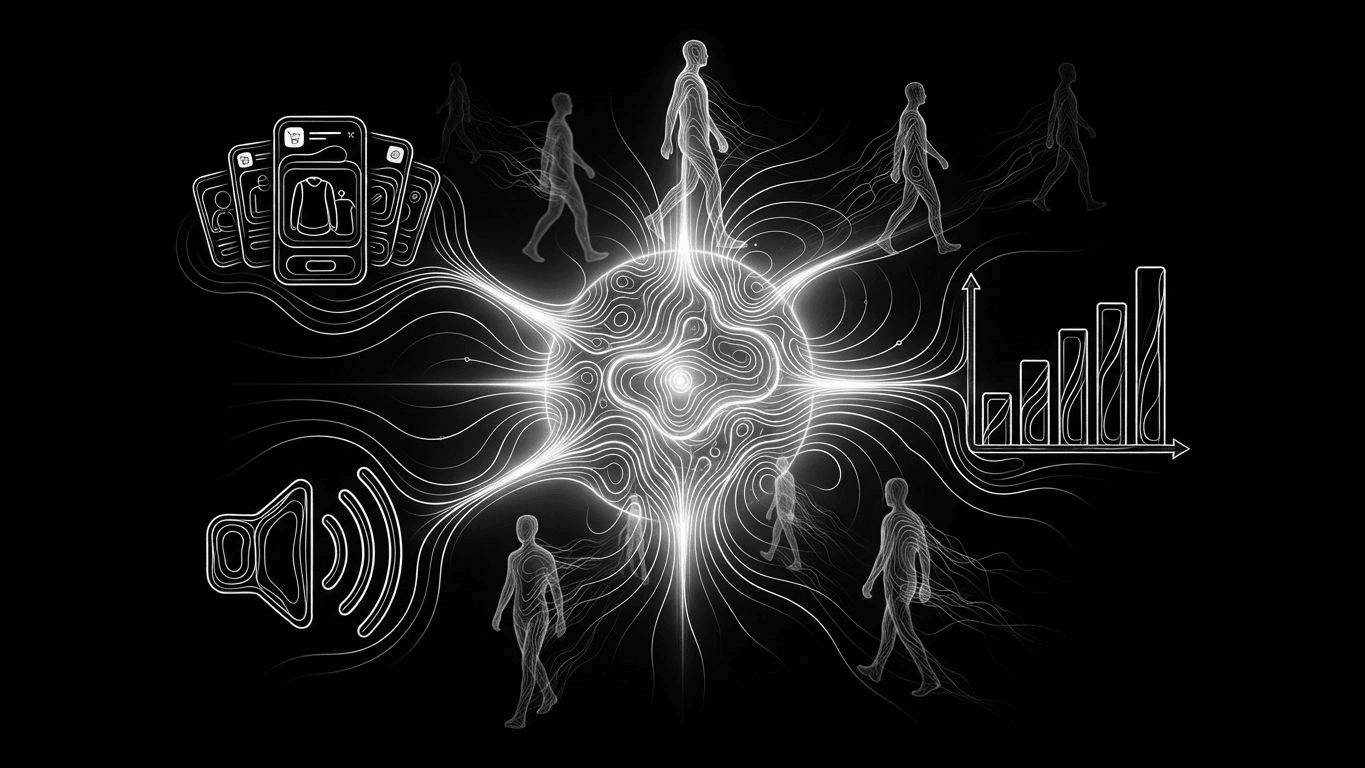
Brand Memory is a persistent context graph that stores everything a brand knows: voice, catalog rules, audience data, performance history, and decision traces. It is the operational backbone of ShopOS. Every agent reads from it. Every human on the squad writes to it. Knowledge stops living in people and starts living in the system.
ShopOS Brand Memory is not a wiki or a shared Google Drive folder. It is a structured, living context layer that every agent, including Monica, Richard, Gavin, and Dinesh, references before executing any task. When Richard audits your Shopify PDP copy, he draws on the stored catalog logic. When Gavin runs a ROAS audit, he references prior campaign performance and documented audience segments. When Monica generates ad creatives, she works from the stored brand voice, not a brief someone wrote in a hurry this morning.
The memory compounds. Month one, agents are learning your brand. By month three, they know it better than most employees. The switching cost rises, not because ShopOS locks you in, but because your brand intelligence is now richer, more specific, and more useful than anything a new hire could reconstruct.
What Brand Memory stores and protects:
- Brand voice, tone rules, and language flags stored and enforced across all outputs
- Catalog logic covering product attributes, naming conventions, and exclusion rules, persisted across team changes
- Performance history with decision traces: what was tested, what won, what was killed, and why
- Audience and segmentation data tied to campaign outcomes, not just stored as raw numbers
📊 ShopOS design partner Tower used Brand Memory-backed AI workflows to maintain creative consistency across catalog imagery, social visuals, and ad video across team transitions, without re-briefing from scratch. ShopOS customer case, 2024.
"Brand Memory is not a document. It is a context graph that compounds. The longer it runs, the more your brand knows, and the less it depends on any individual to remember."
How Do You Actually Build a Brand Memory That Survives Team Changes?
Building a Brand Memory that survives turnover means capturing decisions in real time, not during offboarding. ShopOS structures this into a 60% fixed core covering brand fundamentals that rarely change, and dynamic layers updated by agents and humans continuously. No single person owns the memory.
The mistake most brands make is treating knowledge capture as an exit interview activity. By then it is already degraded. ShopOS builds Brand Memory continuously. Every campaign that runs through Loops, every creative variant tested in Spaces, and every catalog update Richard executes adds a data point to the memory graph.
The squad model reinforces this. The Account Manager, Squad Lead, and Associate all operate from the same shared Brand Memory. No single person is the knowledge bottleneck. When someone rolls off, the context does not go with them.
Anirudh Soory, VP at Hardlines, described it plainly: AI-powered workflows helped them scale storytelling without compromising on brand identity, through multiple campaigns and multiple team members, without creative drift.
How to build Brand Memory that survives team changes:
- Capture decisions in real time, not during exit interviews
- Use Loops to log what was tested, what won, and why, automatically
- Assign Brand Memory ownership to the system, not to a person or role
- Start with the fixed core covering voice, catalog rules, and audience definitions, then let the dynamic layer grow
Brand Memory access by plan:
- Free: $0/month. One Brand Memory, 500 credits, 30-day trial.
- Pro: $19/month or $15/month billed annually at $150/year. Two Brand Memories. Connectors, Batch, and AI Refinement included.
- Plus: $49/month or $39/month billed annually at $468/year. Five Brand Memories, two-user workspace.
- Growth: $99/month or $79/month billed annually at $948/year. Five Brand Memories, 14,000 shared credits, Priority Support, four-user workspace.
- Business: $199/month or $159/month billed annually at $1,908/year. Five Brand Memories, Human Refinement, ten-user workspace.
- Enterprise: Custom pricing. Custom Brand Memory configurations with unlimited Brand Memories and dedicated model routing for large teams.
- Managed Growth Squad: Rs5L/month. Brand Memory as operational core with performance ops, creative ops, and catalog ops all reading from and writing to the same system.
📊 ShopOS reports 40% faster campaign turnaround for fashion and apparel brands using Brand Memory-backed agent workflows versus traditional agency briefing cycles. ShopOS internal case study, 2025.
"The goal is not better documentation. The goal is a system where the brand knows what it knows, regardless of who is on the team this quarter."
What Features Do You Get on Each Plan?
Not all features are available on every plan. Here is a quick reference before you choose.
| Feature | Free | Pro | Plus | Growth | Business | Enterprise |
|---|---|---|---|---|---|---|
| Brand Memory | Basic | Full | Full | Full | Full | Full + Custom |
| Cowork Access | Yes | Yes | Yes | Yes | Yes | Yes |
| Images | Yes | Yes | Yes | Yes | Yes | Yes |
| Videos | Yes | Yes | Yes | Yes | Yes | Yes |
| Image Edit | Yes | Yes | Yes | Yes | Yes | Yes |
| AI Refine | No | Yes | Yes | Yes | Yes | Yes |
| Human Refinement | No | No | Yes | Yes | Yes | Yes |
| Workspace | No | No | Yes | Yes | Yes | Yes |
| Connectors | No | Yes | Yes | Yes | Yes | Yes |
| Batch Generation | No | Yes | Yes | Yes | Yes | Yes |
| Custom Model Routing | No | No | No | No | Yes | Yes |
| Priority Support | No | No | Yes | Yes | Yes | Yes |
Brand Memory is available on all plans. Full Brand Memory with persistent context across all agents unlocks at Pro. The number of Brand Memories increases from one on Free to two on Pro and five on Plus through Business. Human Refinement, where a squad lead writes validated decisions back into Brand Memory, unlocks at Business. Annual billing saves roughly 20% across all paid plans. You can switch between monthly and yearly billing at any time.
Frequently Asked Questions
What is institutional knowledge and why do brands lose it?
Institutional knowledge is the accumulated understanding of what works: brand voice, campaign history, product logic, and audience behavior. Brands lose it because it lives in individuals, not systems. When people leave, that knowledge leaves with them, forcing new hires to rediscover what was already proven.
What is ShopOS Brand Memory?
Brand Memory is ShopOS's persistent context graph. It stores brand voice, catalog rules, audience data, performance history, and decision traces. Every AI agent on the platform reads from it and writes to it. Knowledge lives in the system, not in any individual team member.
How much does ShopOS Brand Memory cost?
Brand Memory is available on all ShopOS plans. The Free plan includes one Brand Memory. Pro at $19/month on monthly billing (or $15/month annually) includes two. Plus at $49/month on monthly billing (or $39/month annually) includes five. Enterprise plans include custom Brand Memory configurations for large teams with multiple workspaces.
Can Brand Memory prevent brand voice drift when team members change?
Yes. Brand Memory stores voice rules, tone flags, and language guidelines as structured data. Every agent, including Monica for creative, Richard for catalog, and Dinesh for email, references the same Brand Memory before generating any output. Voice stays consistent regardless of who is on the team.
How is ShopOS Brand Memory different from a brand guidelines document?
A brand guidelines document is static and quickly outdated. Brand Memory is a living context graph updated continuously by AI agents and human squad members. It captures decisions, campaign outcomes, and performance history in real time, not once a year during a brand refresh.
Can I try ShopOS before committing to a paid plan?
Yes. The Free plan gives you up to 30 days to explore the platform with 500 credits and one Brand Memory, no credit card required. Full Brand Memory with Connectors and Batch generation unlocks from the Pro plan. You can upgrade or cancel at any time.